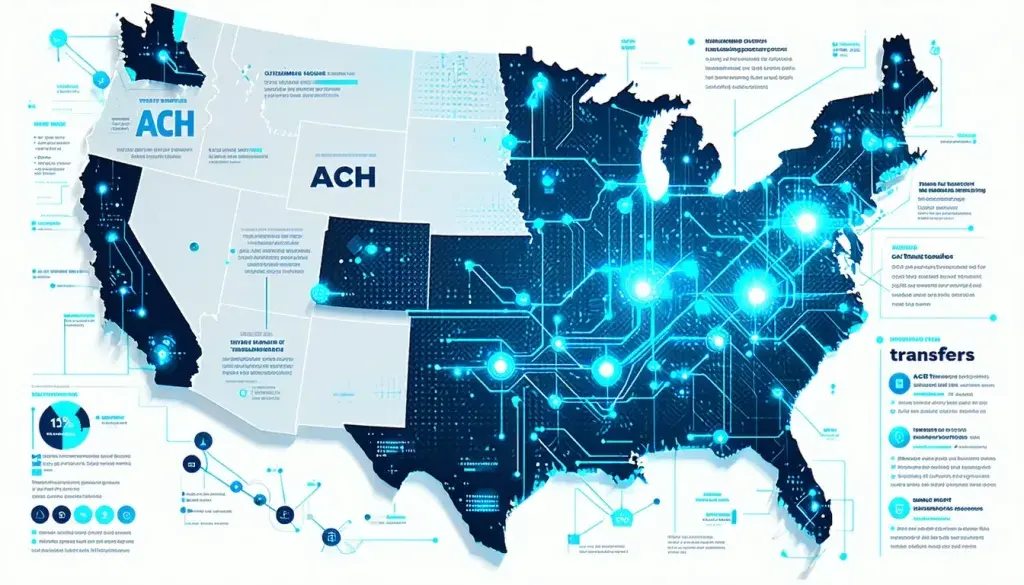
Every business day, the ACH network settles payments worth more than $200 billion, powering everything from payroll to utility bills across the United States. This volume underscores the backbone role of ACH transfers in the financial system, yet confusion persists about what ACH means and how these transfers function. An ACH transfer, processed through the Automated Clearing House, enables electronic movement of money between bank accounts without physical checks or cash. Banks batch these instructions and exchange them through regional operators, ensuring efficient, low-cost clearing.
What elevates ACH beyond simple transfers is its reliability and scale. Direct deposits reach 80% of U.S. workers monthly, while billions in bill payments avoid late fees. For businesses, ACH meaning extends to streamlined operations, reducing paperwork and fraud risks compared to paper checks. Individuals benefit from predictable timelines, often 1-3 days for settlement.
This article demystifies the ACH transfer process, from initiation to completion, while detailing the ACH network's structure. Readers gain practical knowledge to initiate transfers confidently, compare options, and navigate common pitfalls. Whether managing personal finances or business cash flow, understanding ACH equips you to leverage this essential tool effectively.
What Does ACH Mean? The Fundamentals
Core Definition of ACH
ACH stands for Automated Clearing House, a network for electronic funds transfers between depository institutions. What ACH means in practice is a standardized method for debiting or crediting accounts via batch processing. Unlike real-time wires, ACH groups transactions for overnight settlement, prioritizing cost efficiency over speed.
ACH Meaning in Everyday Finance
The ACH meaning revolves around secure, batch-oriented payments. Consumers encounter it in direct deposits and online bill pay; businesses use it for vendor payments. This system processes diverse entries, from payroll credits to loan debits, all under Federal Reserve or private operator oversight.
ACH vs. Wire Transfers and Cards
ACH transfers differ from wires in speed and cost—wires settle same-day for higher fees, while ACH takes days but costs pennies. Card payments suit retail but carry interchange fees; ACH excels in recurring or bulk transfers. Each serves distinct needs: immediacy for wires, volume for ACH.
- ACH: Low-cost, 1-3 days
- Wire: Fast, expensive
- Card: Instant, merchant-funded
The ACH Network Explained
Structure and Key Operators
The ACH network connects over 10,000 financial institutions via two central clearing facilities: the Federal Reserve Banks and The Clearing House (EPC). Originators submit files to their bank (ODFI), which forwards batches to an ACH operator for exchange with receivers' banks (RDFI).
Governance and Rules
Nacha governs the ACH network, enforcing operating rules updated annually. These cover authorization requirements, return windows (up to 60 days for some), and data security standards. Compliance ensures interoperability across participants.
Scale and Daily Operations
Processing peaks at 150 million payments daily, with settlements occurring three times per business day. The network's resilience handles surges, like tax season refunds, maintaining 99.999% uptime.
ACH Transfer Process Step by Step
Initiation and Authorization
To start an ACH transfer, the originator obtains written or electronic authorization from the receiver. Businesses use forms compliant with Nacha rules; consumers authorize via banking apps. The ODFI validates and batches the entry.
Processing and Settlement
Files transmit by 2:45 AM ET to operators, who sort and deliver by 8:30 AM. RDFIs post entries that afternoon or next day. Credits settle funds to receivers; debits withdraw from them.
- Day 0: Originator submits
- Day 1: Exchange and posting
- Day 2-3: Final settlement if returns
Common Entry Types
PPD handles consumer debits/credits like bills; CCD supports business transactions. CTX carries remittance data for invoices. Each type dictates authorization and return rules.
Types of ACH Transfers
Direct Deposit (Credits)
Employers credit payroll to employee accounts via PPD or CTX. Governments distribute benefits this way, ensuring timely access without check cashing delays.
Bill Payments (Debits)
Consumers authorize utilities or lenders to debit accounts monthly. WEB entries enable e-commerce recurring payments, with strict verification.
Business-to-Business Payments
CCD and CTX facilitate supplier payments with invoice details. This reduces mailing costs and accelerates cash flow compared to checks.
Benefits, Risks, and Security
Key Advantages
ACH transfers cost under $0.30 each, versus $15+ for wires. They cut float time, minimize errors, and support straight-through processing. Adoption saves businesses billions annually in check handling.
Potential Risks
Return rates average 1-2%, from insufficient funds or unauthorized entries. Delays occur during holidays; exposure exists until settlement. Returns peak at 10% for some debit types.
Security Protocols
Nacha mandates same-day ACH for urgency, micro-entries for verification, and encryption for files. Banks apply fraud monitoring; originators screen against OFAC lists.
Setting Up ACH Transfers
For Personal Use
Link accounts via bank apps, providing routing and account numbers. Authorize specific amounts or ranges. Monitor via statements for confirmations.
For Business Implementation
Partner with ODFI supporting ACH origination. Implement software for batching, like ERP integrations. Train staff on rules to avoid violations.
Frequently Asked Questions
How long does an ACH transfer take?
Standard ACH credits post next business day; debits same. Same-day ACH settles within hours for eligible entries. Holidays extend timelines by one day.
Is ACH free?
Many banks offer free consumer ACH; businesses pay per transaction, often $0.20-$0.50. Returns incur fees up to $25.
Can ACH transfers be reversed?
Credits rarely reverse; debits return within 2-60 days for errors or NSF. Unauthorized debits require prompt notification to RDFI.
What if an ACH payment fails?
RDFI notifies originator via return entry. Common causes: invalid account or stop payment. Retry with corrected data or alternative method.
Does ACH work internationally?
Domestic only; international uses SWIFT or local equivalents. Cross-border ACH pilots exist but lack full adoption.
Are ACH transfers safe from fraud?
Authorization and monitoring reduce risks, but phishing prompts fake approvals. Use dual authentication and review entries regularly.